
A Summer’s End – Hong Kong, 1986
Play A Summer’s End – Hong Kong, 1986
A Summer’s End – Hong Kong, 1986 Screenshots







A Summer’s End – Hong Kong, 1986 review
Exploring the acclaimed 1980s love story set in vibrant Hong Kong
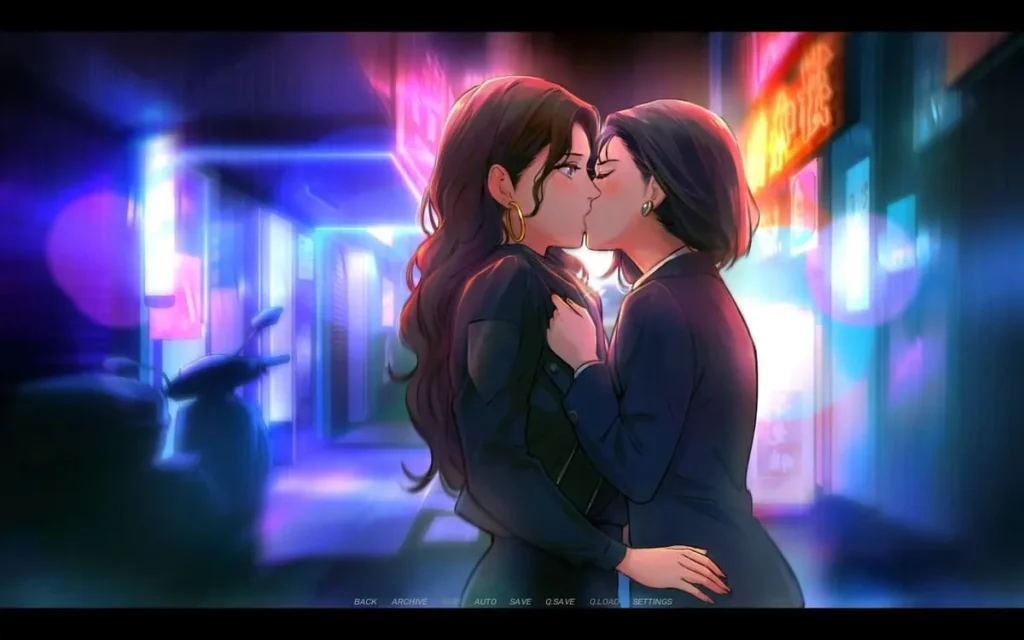
A Summer’s End – Hong Kong 1986 stands out as a critically acclaimed visual novel that tells an intimate love story between two women navigating identity and relationships in 1980s Hong Kong. This game combines stunning hand-drawn artwork inspired by retro anime aesthetics with a compelling narrative that explores themes of family, culture, and personal discovery. Whether you’re a visual novel enthusiast or curious about this unique gaming experience, this guide covers everything you need to know about this atmospheric romance adventure set against the backdrop of vibrant Hong Kong streets and scenic coastal landscapes.
Story, Characters, and Narrative Depth
Let’s be honest, sometimes you click on a visual novel romance narrative for the pretty art and the promise of a cute date, and you end up getting so much more. You find a story that sticks with you, with characters who feel real, and a setting that becomes a character itself. That’s the magic trick A Summer’s End – Hong Kong, 1986 pulls off with effortless grace. It’s not just a love story; it’s a heartfelt exploration of identity, family, and a city at a crossroads, all wrapped in the neon glow and synth-wave beats of the 1980s. 🎵✨
This acclaimed 1980s Hong Kong love story invites us into a world that feels both nostalgically distant and intimately familiar. At its heart is the delicate, evolving bond between Michelle and Sam, a relationship that forms the emotional core of the entire experience. To understand this game is to follow their journey, meet the people who shape their world, and unravel the rich themes woven into every conversation and choice. Let’s dive into the narrative depth that makes this title so special.
Following Michelle and Sam’s Journey
Our entry point into this world is Michelle, a young office worker living a life of quiet routine. Her days are a cycle of work, family dinners, and subdued expectations—a portrait of a specific kind of life in 1986 Hong Kong. She’s pragmatic, a little worn down by filial duty, and isn’t necessarily looking to turn her world upside down. Then, she meets Sam. 💥
Sam is everything Michelle isn’t in that moment: openly queer, confident, self-employed with her own video rental store, and radiating a kind of freedom Michelle has never allowed herself to consider. Their chance meeting isn’t a dramatic cinematic crash; it’s a believable, awkward, and wonderfully human encounter that sparks something. The Michelle and Sam relationship is often described as a “quick-burn” romance, and it’s true—their connection deepens rapidly over a single, fateful summer.
But what makes their story so compelling isn’t the speed, but the substance. The A Summer’s End Hong Kong 1986 story uses this accelerated timeline to focus intensely on the emotional and psychological landscape of a new, same-sex relationship. We’re not watching months of will-they-won’t-they; we’re in the trenches of “they are, and now what?” The narrative brilliantly balances swoony romantic moments with deep, sometimes difficult, conversations about the future, fear, and what it means to be yourself.
Every interaction between them feels charged with the unspoken rules of their time and culture. They don’t just say what they feel; they hint at it, circle around it, and speak in a kind of emotional shorthand that feels authentic to the oblique East Asian conversation patterns the game masterfully portrays. Watching them slowly learn each other’s language—both literally and emotionally—is one of the great joys of the visual novel romance narrative.
Supporting Characters and Relationship Dynamics
No relationship exists in a vacuum, and the world of A Summer’s End is populated by characters who perfectly contextualize Michelle and Sam’s romance. They aren’t just background figures; they are active forces that push, pull, and shape the central love story, creating a rich web of family conflict in visual novels and social pressure.
The most prominent of these is Joey, Michelle’s well-meaning but hopelessly oblivious coworker. He represents the “expected” path—a nice, traditional suitor who is completely out of sync with who Michelle is and what she wants. His presence isn’t played for cheap jealousy or drama; instead, he highlights the quiet pressure of societal norms. Michelle’s gentle but firm lack of interest in him is a small, daily act of defiance, a rehearsal for the bigger conversations she must have.
Then, of course, there is family. Michelle’s mother is a paramount presence, her expectations a constant weight. Their interactions are a masterclass in unspoken tension. Love is expressed through food and concern, while disappointment and fear simmer beneath the surface. This isn’t a cartoonish villain; it’s a painfully real portrait of generational divide and the fear of a child stepping off a pre-ordained path. The potential for family conflict in visual novels is fully realized here, not as a simple obstacle, but as a fundamental part of Michelle’s identity that she must reconcile.
Sam’s world, while more openly accepting, has its own scars and history, hinting at past struggles and a hard-won independence. Together, these supporting characters create the “real world” that Michelle and Sam’s summer bubble exists within, making their choices feel weighty and consequential.
| Character | Role | Key Characteristics |
|---|---|---|
| Michelle | Protagonist, Office Worker | Pragmatic, dutiful, inwardly yearning, navigating self-discovery. |
| Sam (Samantha) | Love Interest, Video Store Owner | Confident, openly queer, independent, serves as a catalyst for change. |
| Joey | Co-worker / Suitor | Traditional, well-meaning, represents societal expectations and the “default” path. |
| Michelle’s Mother | Family | Loving but traditional, her expectations create central emotional conflict. |
Themes of Identity and Cultural Context
If the Michelle and Sam relationship is the heart of the game, its themes are the soul. A Summer’s End – Hong Kong, 1986 is a powerful exploration of what it means to seek your identity in a rapidly changing world where conflicting worldviews collide. Hong Kong in 1986 is the perfect setting for this—a vibrant, buzzing metropolis caught between its colonial past and an uncertain future, mirroring Michelle’s own personal crossroads. 🏙️➡️❓
The game tackles the experience of being gay during uncertain times within a conservative culture with remarkable nuance. It acknowledges homophobia and social stigma not as sensationalized tragedy, but as a pervasive, low-grade hum of anxiety—a series of sidelong glances, careful word choices, and the heavy knowledge of “otherness.” This approach makes the story profoundly relatable and emotionally honest. As one insightful reviewer put it:
“The game portrays the tension of being queer in a traditional setting not with loud explosions of drama, but with the quiet, persistent dread of a dinner table conversation that might veer into dangerous territory. It finds the conflict in a mother’s silent disappointment, not in a shouted slur.”
This quote gets to the core of why the A Summer’s End Hong Kong 1986 story resonates so deeply. The family conflict in visual novels here is internal as much as external. Michelle’s biggest battle is often with herself—her conditioning, her fear of hurting her family, and her own internalized doubts. The narrative brilliantly explores how we untangle love for our family from the need to live authentically for ourselves.
Ultimately, the game is about the search for meaning and a place to belong. Michelle is seeking a life that feels like her own. Sam is seeking a connection that acknowledges her whole self. Their summer together is a temporary haven where they can explore these questions. The visual novel romance narrative serves as the vehicle for this deeper exploration, proving that a love story can also be a powerful story of self-affirmation.
This brings us, inevitably, to the choices and consequences—the A Summer’s End endings explained. Without giving away all the details, the narrative leads to two primary conclusions that reflect the game’s core themes. The standard ending is one of hopeful, realistic commitment. It’s not a fairy-tale “happily ever after,” but a brave, conscious choice to face an uncertain future together, embracing both the joy of love and the challenges of their world. It’s a beautifully earned moment of courage. 💖
Conversely, the alternative ending is a poignant reflection on the weight of those challenges. In this path, fear and duty win out. Michelle and Sam part ways, their summer romance becoming a bittersweet, life-changing memory. This ending is just as powerful, a tragic yet valid exploration of how societal and familial pressure can shape a life. It underscores that the 1980s Hong Kong love story isn’t a fantasy; it’s grounded in the real sacrifices people make. Understanding these conclusions is key to appreciating the full emotional scope of the A Summer’s End Hong Kong 1986 story.
In the end, the legacy of A Summer’s End – Hong Kong, 1986 is how it elevates its genre. It presents LGBTQ visual novel characters with depth, humanity, and respect, placing their personal journey against a richly realized historical and cultural backdrop. It proves that a romance can carry the weight of big ideas about identity, family, and change, leaving players not just satisfied with a love story, but moved by a genuinely profound human experience.
A Summer’s End – Hong Kong 1986 represents a thoughtfully crafted visual novel that transcends typical genre expectations by delivering a compelling romance grounded in authentic cultural context and character development. The game’s meticulous attention to 1980s Hong Kong aesthetics, combined with its nuanced exploration of identity and family dynamics, creates an immersive experience that resonates with players seeking meaningful storytelling. Whether you’re drawn to the stunning hand-drawn artwork, the atmospheric soundtrack, or the intimate character relationships, this visual novel offers a rich narrative experience that respects its subject matter and audience. For those interested in exploring LGBTQ narratives in gaming or appreciating retro-inspired visual design, A Summer’s End stands as a must-play title that demonstrates the artistic potential of the visual novel medium.